
Introduction
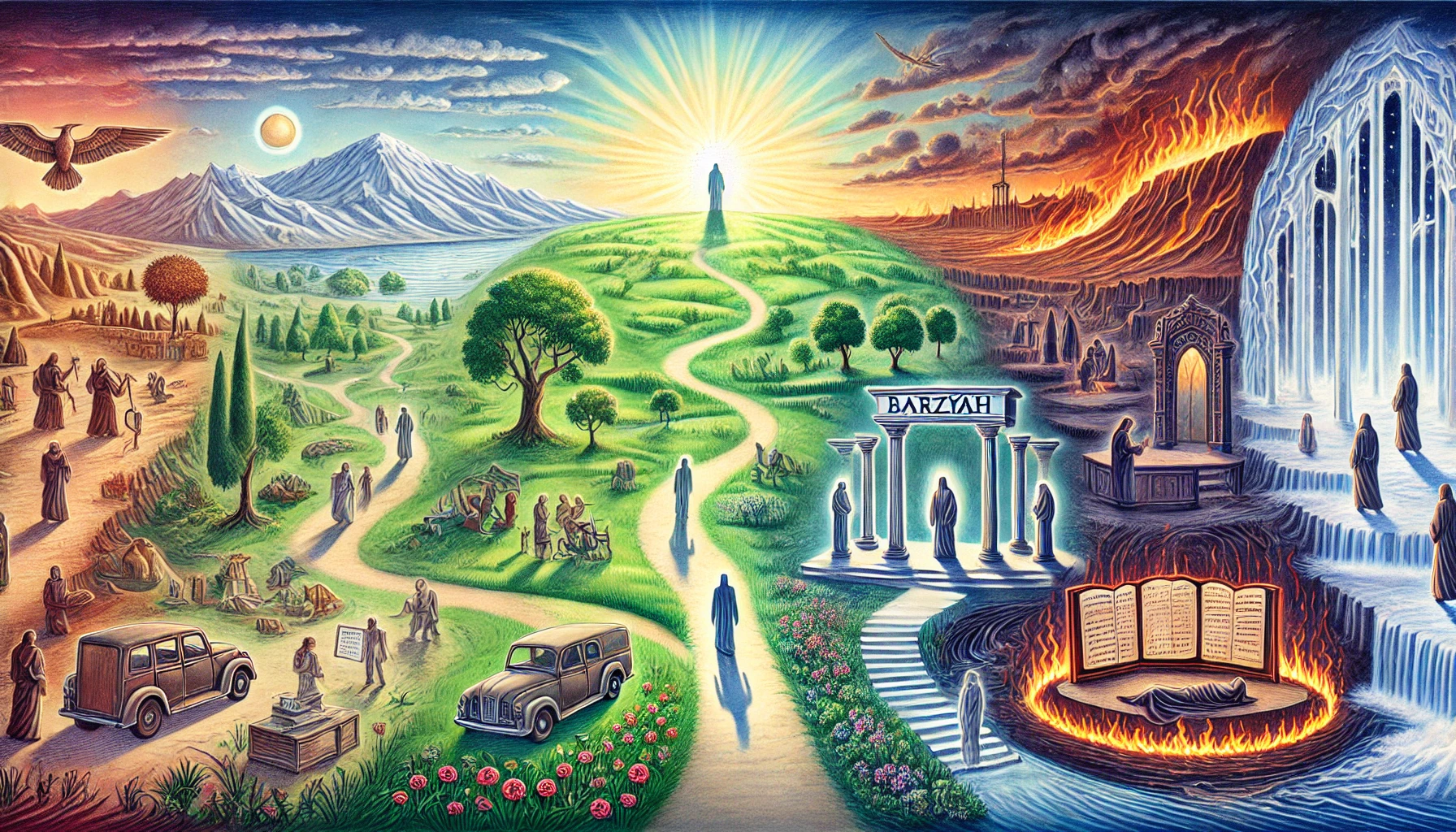
Across various religious traditions, the concept of an intermediate state after death—commonly referred to as Barzakh in Islamic thought—is debated in terms of whether it includes conscious experience, punishment, or reward before the final Judgment Day.
While some interpretations suggest that sinners suffer in this intermediate state, a logical and textual analysis reveals a critical problem: punishment before judgment contradicts both divine justice and scriptural coherence.
1. If Punishment Happens Before Judgment, the Judgment Becomes Pointless
The Qur’an repeatedly states that the book of deeds will be given on the Day of Judgment, not before (e.g., 17:13–14, 69:19–29).
Only after this event does the soul learn its final destination—Paradise or Hell.
Logical flaw: If someone is punished in Barzakh before knowing their verdict, justice is bypassed, and punishment precedes trial, which is illogical and unjust.
2. The Qur’an Clearly Says People Are Unaware of Time After Death
In Surah 23:112–113, God asks:
"How long did you remain on Earth?"
They reply: "A day or part of a day. Ask those who kept count."
This shows that the dead are not aware of time passing.
If they had experienced suffering for centuries in Barzakh, they would have remembered it.
Conclusion: Their statement proves they were not conscious after death, making a conscious Barzakh impossible for the majority of people.
3. Judgment Requires Knowledge – The Book Must Be Handed First
Surahs 17:14 and 69:25–32 describe people receiving their book in the left hand as a sign of damnation.
Only after receiving the book does the person realize their fate.
Problem: If someone is already suffering in Barzakh, they must already know they are doomed.
But then, the book and the judgment are redundant—contradicting divine justice and the Qur’anic structure.
4. Surah 23:99–100 Refers to the Moment of Death – Not Barzakh
These verses describe a dying person begging God to return to life and do good.
But it is immediately rejected:
"Never! It is only a word he speaks. And behind them is a barrier (Barzakh) until the Day they are resurrected."
This indicates that the awareness ends at the moment of death.
Barzakh is a barrier, not a conscious experience.
5. Time Itself Ceases for the Dead
Multiple verses and logic support the idea that death is like dreamless sleep—a pause in awareness.
People awaken on Judgment Day with no memory of death, time, or suffering.
This explains the concept of the soul “sleeping” until resurrection – a direct contradiction to the idea of suffering in Barzakh.
Conclusion
✅️ No soul is punished before it is judged.
✅️ Barzakh is not a conscious period, except perhaps for a few exceptions like martyrs.
✅️ The Qur’an’s structure and logic are consistent only if awareness ceases at death and resumes at resurrection.
Any doctrine claiming conscious torment before judgment day creates a logical contradiction and violates the principle of divine justice.